
We select all products independently. Should you buy through our links, we may earn a commission.
Tennis training has evolved dramatically in recent years. The best tennis training tools today combine classic practice aids with highly advanced equipment designed to improve technique, movement, and overall consistency. Players have access to a wide range of training and conditioning tools, from swing trainers and grip-position aids to visual trainers and smart ball machines.
These tools make it easier to train with purpose. But the real challenge is choosing training tools that translate into better tennis strokes, footwork, and cleaner mechanics. In this guide our team breaks down what we have found to be the most effective tennis training aids to buy today.
Quick picks
- Tennis Training Tool Categories
- Swing Path and Technique Trainers
- Grip Training Tools
- Wrist Position and Stability Trainers
- Serve-Specific Training Tools
- Essential Solo Practice Tools
- Footwork and Agility Equipment
- Timing, Focus, and Reflex Enhancement Tools
- Ball Control and Touch Development
- Smart Technology, Tracking Devices, Video Analysis Tools
Tennis Training Tool Categories
Tennis training tools generally fall into several key categories, each targeting different aspects of your game:
- Technical development tools that refine stroke mechanics and biomechanics
- Physical conditioning equipment for building tennis-specific fitness and agility
- Solo practice tools that allow productive training without a partner
- Grip and racket enhancement tools that optimize your connection to the racket
- Tactical training aids that develop court awareness and shot selection
- Smart technology for data-driven performance tracking
The most effective training programs combine top tools from multiple categories to create well-rounded development and lasting improvements. Keep in mind, however, that this is not a one-size-fits-all question: the best training tools are also those that target your specific weaknesses.
Swing Path and Technique Trainers
Swing path trainers guide players to feel the ideal low-to-high motion that generates topspin, a key component in modern tennis. For beginners, swing path trainers accelerate feel-based learning, helping them develop strokes that produce clean, safe shots rather than flat, inconsistent balls. Intermediate and more advanced players use them to fine-tune racket trajectory and racket-head acceleration for maximum power and control.
Popular Swing Training Tools
A consistent swing path is the foundation of reliable groundstrokes, and swing trainers exist specifically to help you find it. They let you rehearse the correct motion repeatedly, away from the court, building the muscle memory that makes technique automatic when it counts.
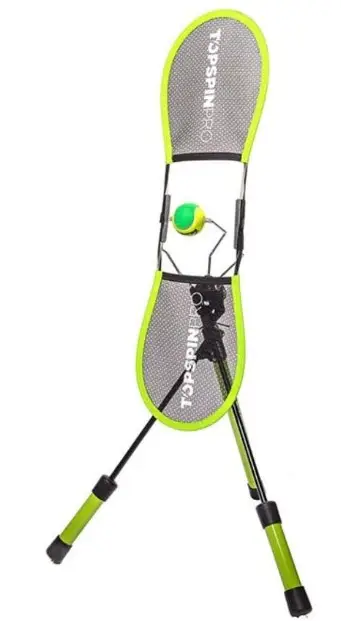
If grip trainers are the newest category, the TopspinPro is the granddaddy of swing trainers — one of the original purpose-built aids and still one of the most widely used. The concept is simple: a ball on a weighted base that uses a directional screen that lets you rehearse the low-to-high swing path of a topspin forehand or backhand without needing a court, a partner, or a ball machine.
It won’t replace hitting real balls, but for grooving muscle memory at home or warming up the correct motion before a session, it’s hard to beat for the price. Coaches use it, academies stock it, and the fact that it’s been around for years without being displaced says something.
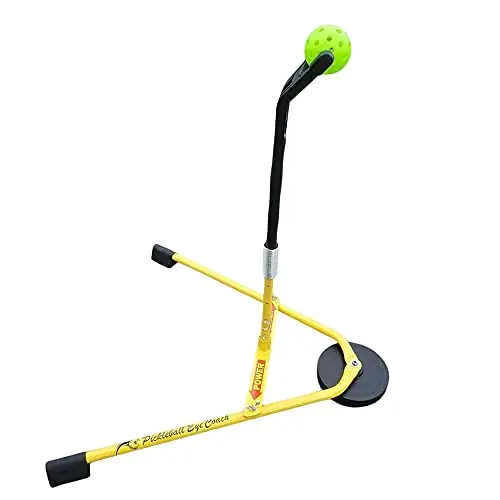
The Billie Jean King Eye Coach tennis simulator takes a different approach to the same goal. Rather than swing path, it’s more focused on training contact point and ball-tracking. It teaches you to keep your head still and watch the ball through contact, which improves timing and reduces mishits.
The two tools actually complement each other well: TopspinPro for how you swing, Eye Coach for where you look and when you hit.
The key benefit is muscle memory development. By repeating the correct motion hundreds of times, your body internalizes the proper swing mechanics. This creates consistency that holds up under pressure, when conscious thought becomes difficult.
However, while swing path trainers are excellent for muscle memory and repetition, they can’t completely replace live-ball practice. The dynamics of footwork, timing, and contact vary too much in real play. Use them alongside rally practice (not as a substitute) for the best results. Ideally, pair them with grip training tools, which will help you develop both the hand position and swing mechanics needed for complete stroke production.
Racket Swing Weights
Weighted training aids work on a simple principle: practice with added resistance, and not only will your arm and shoulder become stronger, your regular racket will also feel lighter and faster by comparison. By extension, this will ultimately benefit your swing’s speed and directional control.
A few sessions a week with a heavier racket can improve racket head acceleration and build the tennis-specific arm strength that translates to penetrating, heavy, and precise groundstrokes and serves.
The most practical options are swing weights — small metal attachments that clamp onto the racket frame in seconds — or lead tape, which lets you add weight more precisely to specific parts of the frame. Both are inexpensive and easy to remove when you’re done. A heavier spare racket works too if you have one sitting around.
One caution: more weight is not better. Keep sessions short, about 10 to 20 minutes, and focus on maintaining clean mechanics rather than just muscling through swings. If you’re prone to tennis elbow or shoulder issues, skip these entirely.
Popular weighted training tools:
- Tennis swing weights (available under various brand names)
- Tourna Lead Tape (also other brands; be careful when handling lead)
Grip Training Tools
Your grip determines everything that happens after contact — spin, direction, power transfer — yet it’s one of the most under-coached fundamentals at every level. Most players get a verbal cue from their coach or a line drawn on the handle, and are left to figure out the rest.
Tacky overgrips like the Tourna Mega Tack or Yonex Super Grab improve traction and make it easier to maintain a grip, but they don’t teach hand positioning. Grip trainers go further: physical guides on the handle steer your hand into the correct position – Continental, Eastern, Semi-Western – so the right grip becomes instinctive rather than something you think about.
Grip position trainers work during actual rallies, not just isolated drills, which means correction happens in real-game contexts.
A secondary benefit is grip tension: a well-designed trainer naturally encourages the right level of firmness, which prevents the chain of problems that come from squeezing too hard — restricted wrist action, slower racket speed, and extra shock on the arm.
Grip trainer benefits by skill level:
- Beginners learn the essential grips fast and with precision, establishing proper fundamentals from day one
- Intermediate players gain awareness of how grip shifts affect spin generation, control, and power transfer
- Advanced players refine technique for modern forehands, net play, slice shots, and adapting to different ball heights
Grip training / hand positioning aids:
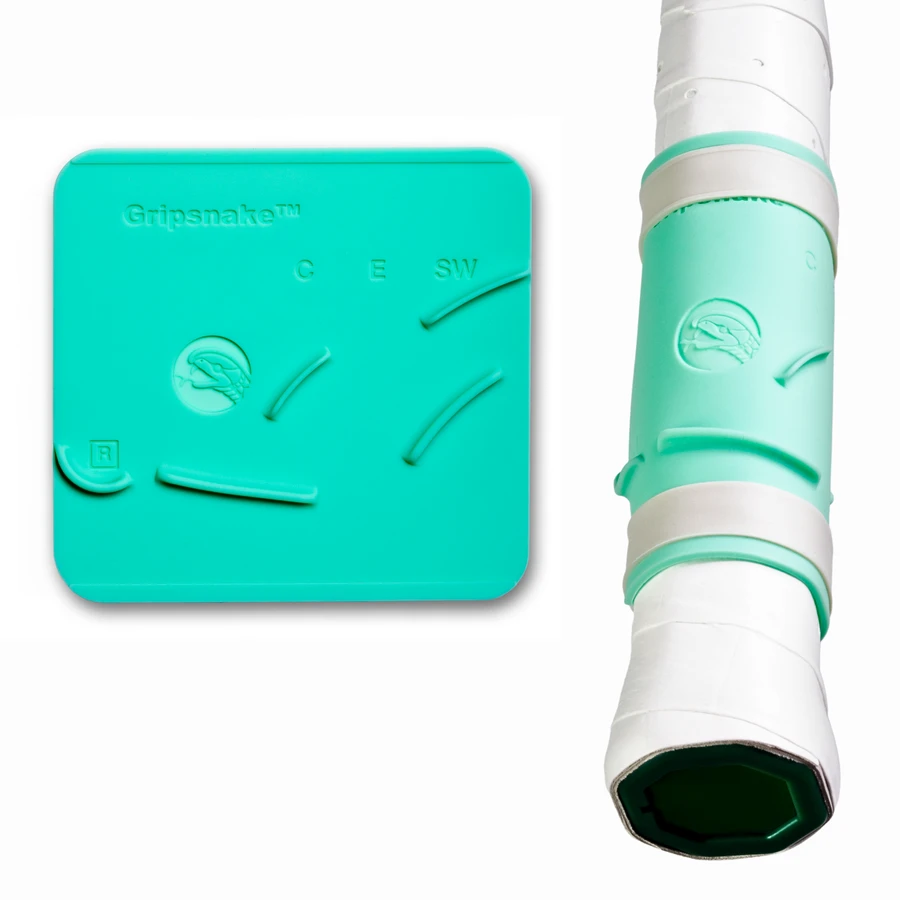
- Gripsnake grip position trainer: covers all major grips, can be used over or under your grip tape, and is the only grip trainer on the market that offers full-hand guidance (also works for Pickleball and Padel)
- OnCourt OffCourt Swing Tool: a simpler option that aims to create the ‘trigger finger’ position
Also important – Grip strength trainers:
For players struggling with tennis elbow or other arm issues often related to incorrect grips or excessive grip tension, addressing their grip fundamentals can be transformative. However, we also strongly suggest strengthening your forearm, fingers, and wrist.
An effective way to do so is using one or several types of specialized tools that target the various muscles, for example:
- Hand and finger grip strength trainers such as FitBeast
- Theraband Flexbars: very effective for tennis elbow prevention/therapy
Wrist Position and Stability Trainers
The wrist is the final link in the kinetic chain, and how it’s positioned at contact has a direct effect on consistency and power. Letting it collapse or deviate through the stroke is a common cause of mishits and loss of control, particularly on the forehand and serve. Wrist position trainers address this by restricting excessive movement, helping your muscles learn what a structurally sound contact point actually feels like.
The WristDoctor is currently one of the main options in this category, a wrist brace designed to hold the correct angle through the swing, with a secondary benefit of keeping the wrist stable during the serve toss. For beginners to early intermediates, this tool can be genuinely helpful.
Wrist position trainers are useful for ingraining the right habit, but come with a clear limitation: wear them too long and you start suppressing the natural wrist variation needed for slice, topspin adjustments, and defensive shots. Think of them as a calibration tool rather than a permanent fixture, useful in short focused sessions, less so as an all-practice crutch. Not every player gets on with them, and that’s fine.
Also, keep in mind that it’s the combination of proper grip and correct wrist position that creates the foundation for technically sound strokes.
Serve-Specific Training Tools
The serve is arguably tennis’s least practiced stroke. Still, the serve needs proper structure and feedback, which some dedicated tools offer.
Developing serve consistency and placement requires thousands of repetitions with immediate feedback. Tools for serve training include target systems that hang in the service boxes or attach to the net provide clear visual goals for each serve, making practice more engaging and measurable. Other tools include swing and motion trainers that aim to teach the correct serve path and motion, or tools that measure serve speed.
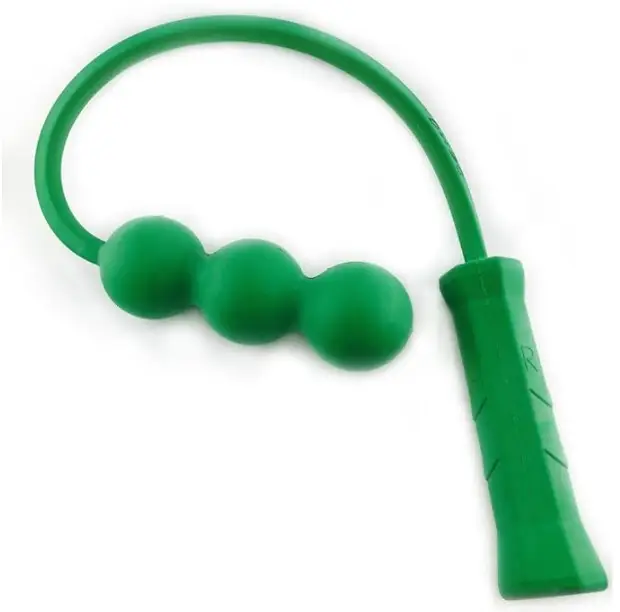
Serve training products:
- ServeMaster: the top serve path and motion trainer on the market
- Tennis Targets: hanging or boundary target systems for precision
- Sports Speed Gun: for serve speed and spin tracking – a good motivator!
When combined with proper grip technique, serve practice becomes dramatically more effective.
Additionally, while not universally effective, some players find success with toss trainers that return or catch the ball in a specific location, providing feedback about toss accuracy. Others benefit from simple methods like practicing tosses near a wall to ensure consistent positioning.
Essential Solo Practice Tools
Ball Machines: High-Repetition Training
Ball machines remain one of the most valuable investments for serious players who want consistent repetition. Modern machines – some of them now even AI-powered – offer programmable shot sequences, varying spin, speed, and trajectory to simulate real match conditions.
The ability to practice specific patterns repeatedly without wearing out a hitting partner or spending big money on coaching sessions makes ball machines invaluable for grooving strokes and building muscle memory.
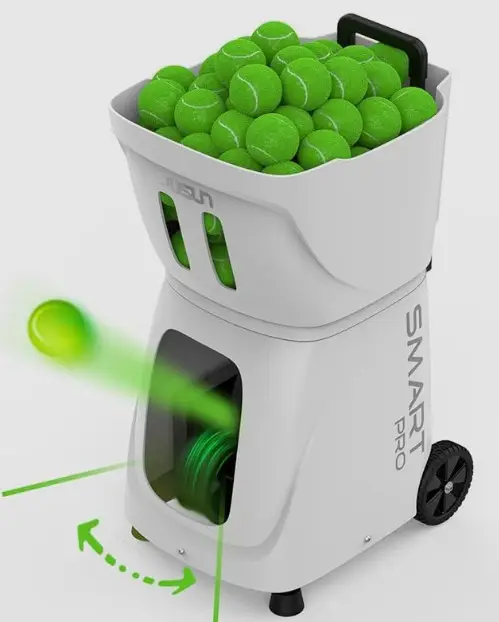
The newest generation of AI ball machines like the Pusun, Pongbot or Proton represent a major leap forward. These machines feature modes that use artificial intelligence to adjust difficulty based on your performance, create realistic match scenarios, and even track your shot accuracy and movement patterns. The AI learns your tendencies and can program drills that specifically target your weaknesses.
When selecting a ball machine, consider portability, ball capacity, and programming capabilities. Entry-level machines provide basic oscillation and speed control, while premium models offer random modes, two-line functionality, and smartphone connectivity for customized drills.
Top ball machines (and a budget option):
- PUSUN PT Smart Pro: with advanced smartphone app and customizable drills
- Lobster Sports Elite: also high-end, with random oscillation and 18-ball capacity
- Slinger Bag: ultraportable design and affordable; featured by Mouratoglou tennis academy
- Ball Feeders: for budget-conscious players (essentially a very basic tennis ball machines)
The beauty of ball machine training is the pure volume of quality repetitions you can achieve. Whether you’re working on handling high balls to your backhand or approach shots, the machine delivers consistent feeds that allow you to focus entirely on execution and biomechanics.
Tennis Rebounders, Practice Nets, Self-Feeding
Tennis rebounders provide an affordable alternative for solo practice, especially for players focused on volleys, reaction time, and hand-eye coordination. These angled nets return the ball at varying speeds depending on your input, creating a continuous rally that develops reflexes and consistency. Automated versions like the Fast Track Tennis system take this approach to the next level and make training even more convenient.
Portable practice nets serve double duty as both a hitting target and a ball collection system. They allow you to work on placement and technique in your driveway, backyard, or even in your home/basement without chasing balls across the neighborhood, and without having to rely on a wall.
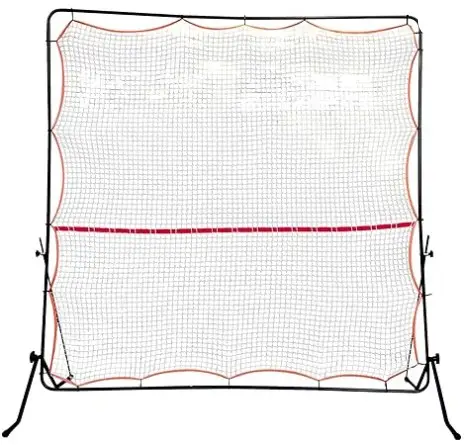
The Tourna Rebound Net is a simple, durable solution for players who want consistent solo practice without needing a partner or court access. Its oversized design makes it especially useful for controlled stroke repetition and volley training in a backyard or driveway setting, and its reliability as a well-built rebounder makes it a solid choice for regular use.
For players looking for additional features and a more automated experience, the Fast Track Tennis system expands on the rebound concept by incorporating automated ball delivery and an app with some entertaining game-like training patterns plus shot analysis for ball speed and RPMs.
Another variation in the solo training category are devices that suspend a ball on an elastic cord (often called “tennis ball on a string” trainers). These tools also allow players to practice their swings without a partner or ball supply.
While simple in concept, these ‘tennis ball on a string’ type aids can be valuable for beginners learning proper form and potentially for intermediate players warming up before matches or getting some reps in at home. The results can be inconsistent given the sometimes erratic ball path and response.
Popular ball-on-string trainers:
Also helpful – ball hoppers:
One often-overlooked practical addition: a quality ball hopper. Spending half your session chasing balls kills momentum and focus. The Wilson Ball Hopper is a reliable, no-frills option that holds enough balls for a solid solo session and doubles as a seat between drills.
Footwork and Agility Equipment
No matter how sound your stroke mechanics are, poor movement will limit your potential. Footwork and agility aids help players improve coordination, reaction times, and speed across the court, creating the physical foundation for consistent execution. After all, footwork is a key to success for every top-level player.
Agility Ladders
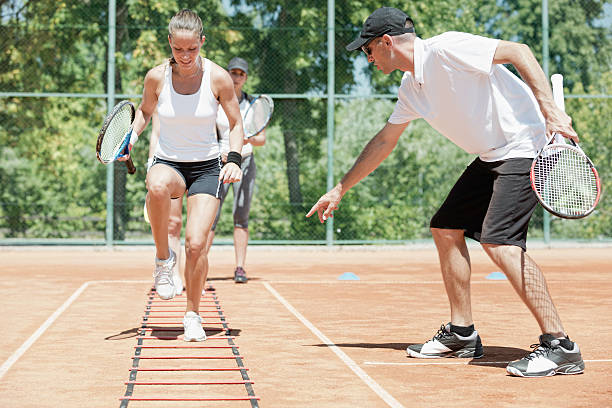
Quick feet translate to better court coverage, and agility ladders remain a staple of tennis-specific conditioning. These portable training tools develop foot speed, coordination, and the ability to make rapid directional changes, all essential for reaching wide balls and recovering efficiently.
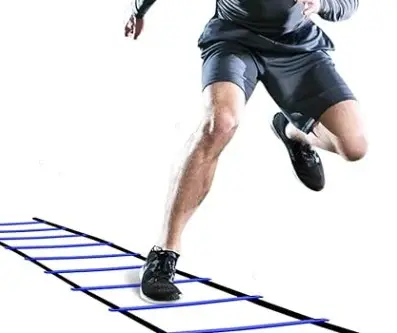
The GHB Pro Agility Ladder is one of the most widely used and straightforward tools for building tennis-specific footwork. Its classic ladder design helps players develop core movement patterns such as split steps, lateral shuffles, and quick first-step explosiveness. As a trusted, well-built option, it’s a reliable choice for consistent off-court training that translates directly into better court positioning and reaction speed.
Another useful variation is the Webby Circle Speed, which shifts the focus from linear ladder work to circular movement patterns. This type of training is particularly effective for improving directional changes, balance, and the ability to recover quickly after wide or awkward positions on the court.
The key is performing tennis-specific patterns rather than generic ladder drills. Focus on exercises that mimic split steps, lateral shuffles, and the explosive first steps you need during actual points. Regular drills enhance explosiveness off the split step, strengthen balance for lateral transitions, and improve recovery between shots.
Beyond sheer speed, agility training develops rhythm, allowing players to time their movement with each shot rather than chasing the ball. A player who moves efficiently can set up balanced, well-timed strokes, especially powerful forehands when paired with proper grip technique.
Cones and Court Markers
Simple yet effective, cones and markers create targets for placement drills and establish movement patterns during footwork exercises. They help players visualize court geometry and develop tactical awareness about angles and positioning.
Flat markers are preferable to tall cones for tennis training, as they won’t interfere with your feet during rapid movement drills while still providing clear visual targets. Use them to create service box targets, establish baseline positioning points, or map out approach shot patterns.
Popular options:
- Flat or shaped training cones (Gamma and other brands)
- Agility Poles for soccer-inspired, creative footwork drills
Resistance Bands and Speed Training
Tennis-specific resistance training builds explosive power for serves and groundstrokes while maintaining proper biomechanics. Resistance bands designed for tennis players create accommodating resistance throughout the swing path, strengthening the kinetic chain without disrupting technique.
Speed parachutes, resistance harnesses, and jump trainers develop the explosive first-step quickness that separates good movers from great ones. These tools create overload conditions that improve acceleration when removed, teaching your body to generate power more efficiently.
Recommended resistance training tools:
- Kinetic Bands leg resistance for explosive movement
- TRX Suspension Trainer for full-body tennis conditioning
- Speed parachutes for sprint resistance training
Timing, Focus, and Reflex Enhancement Tools
Clean ball-striking is as much about perception as mechanics. Watching the ball properly, timing the swing, and finding the sweet spot consistently are skills that can be trained independently of stroke technique, and there are some useful tools for doing exactly that.
Reaction balls are the simplest and most underrated option. Their irregular shape means unpredictable bounces, which forces faster processing and sharper reflexes. They’re not tennis-specific, but that’s part of the appeal: the unpredictability transfers directly to reading a difficult ball in a match.
Reaction balls are widely available from brands like Wilson; but even a generic set works just fine for this purpose. The HecoStix takes a similar approach to reaction balls, but with an innovative shape. The idea is the same, it trains hand-eye coordination and nervous system responses through catching and striking drills.
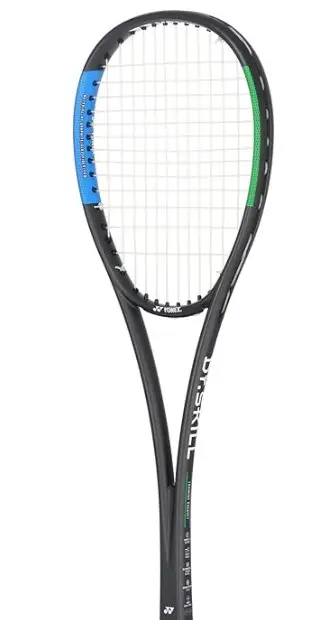
For sweet spot training specifically, reduced-head rackets like the Functional Tennis Saber or Yonex Doctor Skills are worth a try. Their smaller hitting surface punishes off-centre contact immediately and honestly, which accelerates the kind of precise ball-striking that’s hard to develop any other way. Even 10 minutes of drilling with one before switching back to a regular racket can sharpen focus noticeably.
Ball Control and Touch Development
Foam or Low-Compression Balls
Low-compression balls are one of the most underused training tools for adult players. Originally developed for junior progression, the red, orange, and green dot stages slow the ball down and lower the bounce, giving you more time to set up properly and focus on technique rather than just getting the ball back.
They’re particularly useful when learning a new stroke, working through a technical change, or returning from injury. The reduced pace allows more clean repetitions per session, which accelerates muscle memory and builds confidence alongside technique. Touch around the net is another area where they shine, the slower ball makes it easier to develop feel on volleys and drop shots that a regular ball simply doesn’t allow.
Worth trying:
- Wilson Starter Balls – these balls can cover all three stages
- Penn QST 60 – a well-known and solid beginner option
- Dunlop Stage 2 – for intermediate players making technical adjustments.
Smart Technology, Tracking Devices, Video Analysis Tools
Racket sensors were supposed to transform tennis coaching. Devices like Zepp and PIQ promised real-time data on spin rate, swing speed, and stroke type, but most have since been discontinued or become hard to find, a sign that the technology never quite delivered on its promise. The data they produced was useful as a rough guide but rarely precise enough to drive meaningful training decisions.
The more promising development has been camera and app-based analysis, which has quietly become one of the most practical tech tools available to recreational players.
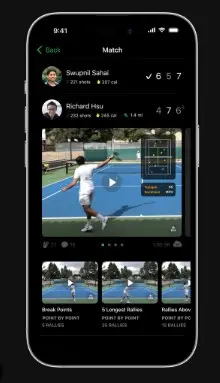
SwingVision is the standout: a phone-based app that uses AI to call lines, track shot placement, and provide match statistics without any additional hardware. Club and recreational players have adopted it quickly, and for good reason. It turns a regular practice session into something measurable, revealing patterns in your shot selection and court coverage that are otherwise invisible. The line-calling alone makes it worth having for anyone who plays without an official.
Video analysis more broadly is worth building into your routine even without a dedicated app. Recording your strokes from the side or behind and comparing them against a reference model remains one of the most direct ways to identify technical issues that feel fine but look problematic. VisualEyes is a solid current option for iOS, offering frame-by-frame playback, annotation tools, and side-by-side comparison.
Fitness trackers and smartwatches round out the category. Most major devices, Apple Watch, Garmin, and Fitbit among them, now include tennis activity modes that log session duration, heart rate, and calories. That data won’t improve your forehand directly, but understanding your training load helps avoid the overuse injuries that quietly derail long-term improvement. For players serious about recovery, wearables like Whoop or the Oura Ring go further, tracking sleep quality and readiness scores that indicate whether your body is actually prepared for a hard session.
Choosing the Right Tools for Your Level
Beginner Players
If you’re just starting out, focus on tools that develop fundamental consistency and proper technique from the ground up:
- Grip feedback tools to establish proper hand positioning from day one
- A quality ball hopper for efficient practice
- Court markers for movement patterns and targets
- Lower-compression balls for technical development
- Basic rebounders for solo practice
- Simple swing path trainers for muscle memory
Avoid the temptation to invest in expensive technology before mastering basics. The best training tool for beginners is consistent practice with clear goals and proper fundamentals. Starting with correct grip and swing mechanics prevents bad habits that are difficult to break later.
Intermediate Players
As you develop, expand your toolkit to address specific weaknesses and add variety:
- Ball machines for high-repetition drilling of specific patterns
- Agility equipment for movement development and court coverage
- Serve targets for placement consistency
- Resistance training tools for power development
- Video analysis to refine technique and biomechanics
At this stage, identifying your specific limitations guides smart equipment choices.
Advanced Players
Serious competitive players benefit from comprehensive training systems and data-driven tools:
- Programmable ball machines with realistic match patterns (or AI-powered models)
- Advanced sensor technology for performance tracking and analysis
- Specialized equipment targeting specific tactical situations
- Recovery and injury prevention tools
- Mental training aids and pressure simulation
Advanced players should also consider tools that simulate match pressure and fatigue, ensuring training transfers to competition. At this level, small improvements in efficiency (whether in grip changes, footwork, or energy transfer) can produce significant competitive advantages.
Maximizing Your Training Tool Investment
Create Structured Practice Plans
Even the best equipment produces minimal results without structured implementation. Design specific drills and progressions for each tool, with clear goals and measurable benchmarks.
Rotate through different tools to maintain engagement and develop well-rounded skills. A sample weekly structure might include ball machine work on ground strokes, agility training for footwork, serve practice with targets, and grip awareness integrated throughout all sessions for continuous reinforcement.
Combine Tools Strategically
The most effective training combines multiple tools in complementary ways. Practice your serve with targets while filming for video analysis. Use agility equipment to warm up before ball machine sessions. Integrate grip feedback tools during regular hitting practice rather than as isolated exercises.
This integrated approach mirrors actual match play, where multiple skills operate simultaneously rather than in isolation. When footwork, grip, swing path, and timing all work together, performance reaches new levels.
Focus on Feel-Based Learning
The best training tools teach through sensation and feedback rather than conscious thought. Your body learns faster through repetition and feel than through verbal instruction alone. Tools that provide tactile, visual, or kinetic feedback (like GripSnake’s grip ridges, swing trainers’ guided paths, or target systems’ immediate placement feedback) accelerate the learning process.
This approach builds instinctive execution that holds up under match pressure, when conscious thought slows reaction time. The goal is automated excellence: technique so ingrained it happens without thinking.
Track Progress Systematically
Document your training with whatever tools you’re using. Record session details, drill performance, and subjective feelings about technique and confidence. Over time, this data reveals what works for your individual development and helps justify equipment investments or identify tools that aren’t delivering results.
Many modern training aids include built-in tracking, but even simple notebook entries about your practice sessions create accountability and reveal patterns in your improvement trajectory.
Maintenance and Longevity
Quality training tools represent significant investments, so proper care extends their useful life:
- Store equipment in climate-controlled spaces when possible to prevent degradation
- Clean ball machines and electronic devices according to manufacturer specifications
- Replace worn grips and traction surfaces before they affect performance
- Inspect equipment regularly for damage that could cause injury
- Rotate ball inventory to ensure consistent quality during practice
- Clean grip training tools to maintain tactile feedback quality
A well-maintained training tool provides years of productive use.
Bottom Line: Investing in Your Game
Effective tennis training tools accelerate improvement by providing consistent repetition, objective feedback, and focused development of specific skills. The key is choosing equipment that addresses your individual needs and integrating it thoughtfully into a comprehensive training program.
Start with versatile, fundamental tools before expanding into specialized equipment. Focus on quality over quantity: a few excellent training aids used consistently outperform a garage full of abandoned gadgets. Most importantly, remember that tools are means to an end, better performance when it matters during actual match play.
Modern tennis training is smarter, more specific, and more accessible than ever. While traditional aids like swing path trainers or ball machines refine certain mechanics, tools that merge seamlessly with real play provide the most lasting improvements because they work during natural practice rather than in artificial isolation.
Each device plays a role in building a complete player, from foundational form to in-match adaptability. If you’re serious about elevating your technique, invest in tools that integrate naturally into your routine rather than isolate one component. Start small, stay consistent, and prioritize feel-based learning over forceful correction.
Whether you’re grooving a new serve motion with targets, developing explosive movement with resistance training, refining your grip fundamentals with specialized tools, or tracking your progress with smart sensors, the right equipment makes every practice session more productive.
Invest wisely, train consistently with proper fundamentals, and watch your game reach new levels. Good luck!